Certified Class A ISP with NLD License—Committed to Superior Network Services.

Email

contact@dataexpress.co.in

Phone

02265510000

Great place to work
Edit Content

About Us

DataExpress was incorporated in 2017 as a Class ‘A’ Telecom ISP (Internet Service Provider) based out of Navi Mumbai, Maharashtra, India.

Edit Content

About Us

DataExpress was incorporated in 2017 as a Class ‘A’ Telecom ISP (Internet Service Provider) based out of Navi Mumbai, Maharashtra, India.

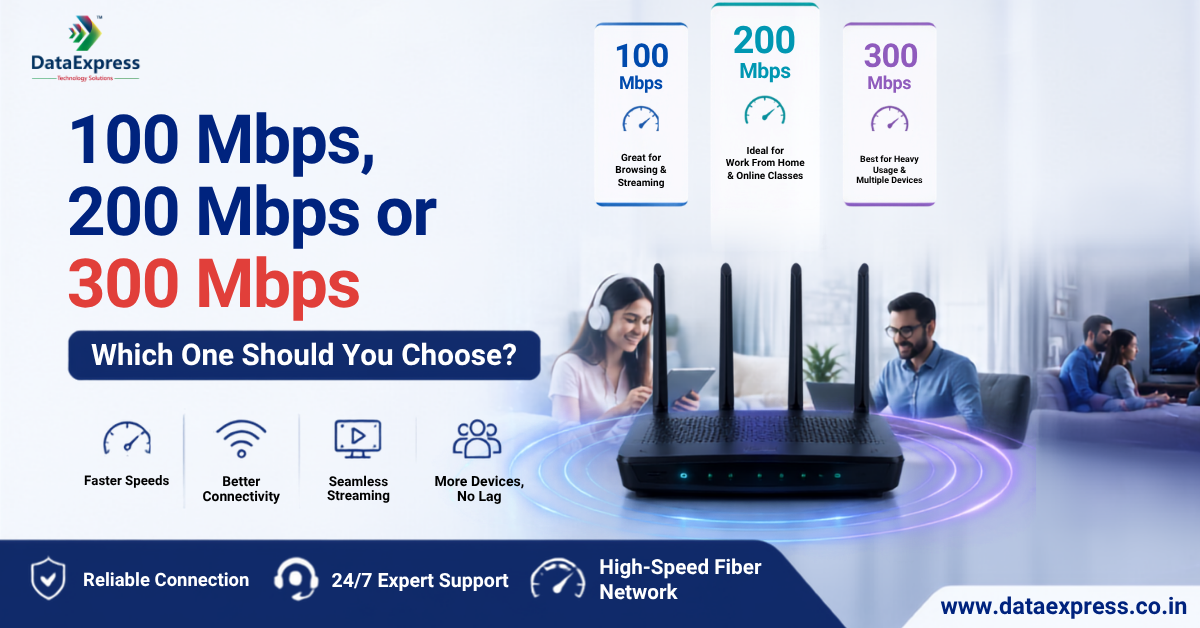
Home100 Mbps, 200 Mbps or 300 Mbps: Which One Should You Choose?Blog100 Mbps, 200 Mbps or 300 Mbps: Which One Should You Choose?

100 Mbps, 200 Mbps or 300 Mbps: Which One Should You Choose?

100 Mbps, 200 Mbps or 300 Mbps: Which One Should You Choose?

100 Mbps, 200 Mbps or 300 Mbps: Which One Should You Choose?

A fast and reliable internet connection is now essential for almost every household. From working from home and attending online classes to streaming movies, gaming, video calling, and using smart devices, internet connectivity plays an important role in our daily lives.

With broadband plans available at 100 Mbps, 200 Mbps, and 300 Mbps, choosing the right speed can sometimes be confusing. Does your family really need 300 Mbps, or is 100 Mbps enough?

The answer depends on your number of users, connected devices, online activities, and simultaneous usage.

Let’s compare these three popular speeds and understand which one is right for your home.

Which Internet Speed Is Right

What Does Mbps Mean?

Mbps means Megabits per second and is a measurement of internet speed. A higher Mbps generally means your connection can handle more data at the same time.

However, internet speed isn’t the only factor that determines your online experience. Your Wi-Fi router, signal strength, device capabilities, network congestion, and the quality of the service you’re accessing can also affect performance.

100 Mbps: Perfect for Everyday Internet Use

A 100 Mbps connection is suitable for small households with moderate internet requirements.

It can easily support activities such as:

If one person is attending a video meeting while another is watching an HD video, a good 100 Mbps connection should generally be able to handle the workload.

Who Should Choose 100 Mbps?

100 Mbps is a good choice for small families, couples, students, and users with basic-to-moderate internet requirements.

If you don’t regularly stream multiple 4K videos, download very large files, or have many people using bandwidth-heavy applications simultaneously, 100 Mbps can provide excellent value.

Best for: Everyday browsing, HD streaming, video calls, online learning, and small households.

200 Mbps: The Balanced Choice for Families

For households with several active users, 200 Mbps provides more bandwidth and greater flexibility.

It is suitable for homes where multiple people may be:

For example, one family member can attend a work meeting while another streams a movie and another uses social media or plays an online game.

Web browsing

Who Should Choose 200 Mbps?

A 200 Mbps plan is ideal for medium-sized families and households where several devices are regularly active.

It provides a comfortable balance between performance and cost, especially if your internet usage is increasing.

Best for: Families, work-from-home users, online learning, streaming, gaming, and multiple connected devices.

300 Mbps: For Heavy Internet Users

A 300 Mbps connection is designed for households with higher bandwidth requirements.

Modern homes may have smartphones, laptops, tablets, smart TVs, gaming consoles, security cameras, and other smart devices connected at the same time.

A 300 Mbps connection provides additional capacity for activities such as:

Who Should Choose 300 Mbps?

Consider 300 Mbps if you have a large family, multiple heavy internet users, or many devices that are actively using the connection simultaneously.

It can also be a good choice for gamers, content creators, and users who frequently transfer large files.

Best for: Heavy users, large families, gamers, content creators, and highly connected homes.

How Many Devices Can Your Internet Handle?

The number of devices connected to your network doesn’t necessarily determine how much speed you need.

For example, you may have 15 devices connected to your Wi-Fi, but if most are inactive, they won’t consume much bandwidth.

On the other hand, six devices could put significant demand on your connection if several are simultaneously streaming 4K videos, downloading files, attending video meetings, or gaming.

Therefore, focus on how many devices are actively using the internet at the same time, rather than simply counting connected devices.

Does Higher Speed Mean Better Wi-Fi?

Not always.

Even with a 300 Mbps broadband plan, you may experience slow Wi-Fi if your router is outdated or poorly positioned.

Your Wi-Fi experience can be affected by:

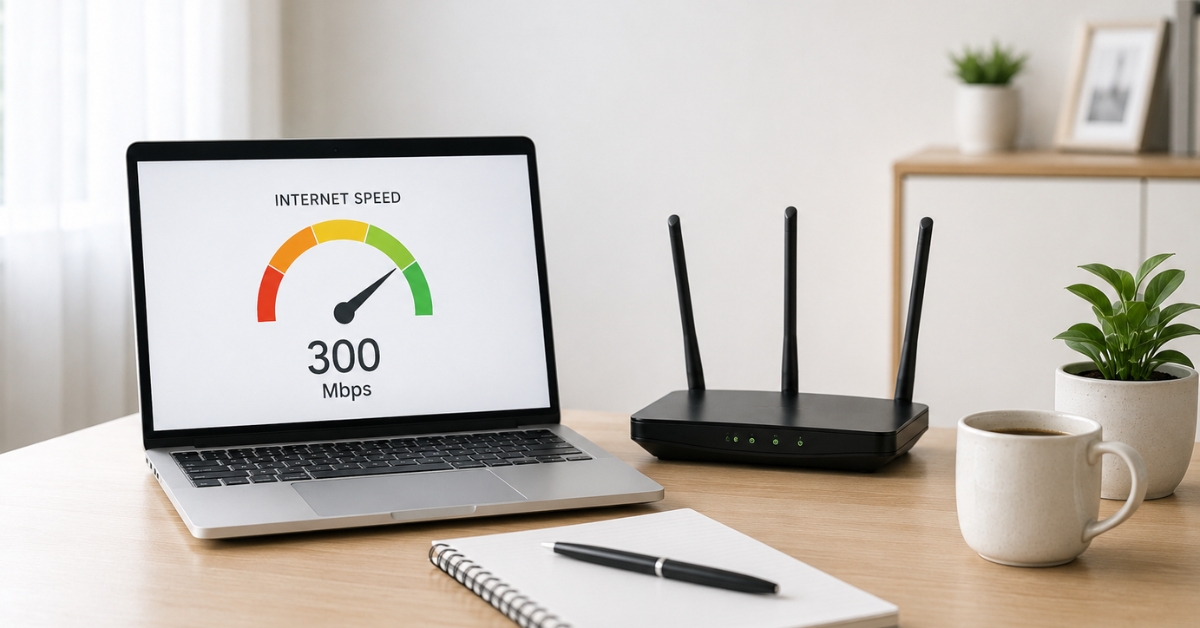
300mpbs

How to Choose the Right Internet Speed

Choose 100 Mbps if:

Choose 200 Mbps if:

Choose 300 Mbps if:

Speed Isn't the Only Thing That Matters

When selecting a broadband connection, don’t look only at the Mbps number.

Also consider:

Reliability: A consistent connection is essential for work, entertainment, and communication.

Upload speed: Important for video calls, cloud backups, content creation, and large file uploads.

Latency: Particularly important for online gaming and real-time applications.

Customer support: Quick assistance can be valuable when connectivity issues occur.

Wi-Fi equipment: Your router should be capable of supporting the internet speed you’re paying for.

Choose the Right Internet Speed with DataExpress

Still confused about which broadband speed is right for your home? DataExpress offers reliable and high-speed internet connectivity designed to match your everyday needs.

Whether you need 100 Mbps, 200 Mbps, or 300 Mbps, choose a plan that delivers the right balance of speed, reliability, and value.

📞 Call us: 022-6551 0000
📧 Email: contact@dataexpress.co.in


DataExpress – Fast. Reliable. Connected.

Leave a Reply

Your email address will not be published. Required fields are marked *