10 Things to Know Before Buying Broadband in 2027
Choosing a broadband connection in 2027 is no longer just about finding the highest speed at the lowest price. With more people working from home, attending online classes, streaming content, gaming, using cloud applications, and connecting smart devices, a reliable internet connection has become an essential part of everyday life.
But with so many broadband plans available, how do you know which one is right for you?
Before buying a broadband connection in 2027, there are several important factors you should consider. Here’s a simple guide to help you make an informed decision.
1. Don't Choose Broadband Based Only on Speed
One of the most common mistakes is selecting a broadband plan simply because it offers a higher Mbps number.
You may find plans offering 100 Mbps, 200 Mbps, 300 Mbps, 500 Mbps, or 1 Gbps. However, the fastest plan isn’t necessarily the best plan for every household.
Your ideal speed depends on:
- Number of users
- Number of connected devices
- Streaming requirements
- Work-from-home usage
- Online gaming
- Video conferencing
- File downloads and uploads
- Smart home devices
A small household with basic browsing and streaming may be perfectly comfortable with 100 Mbps, while a larger family with several simultaneous users may need 200 Mbps, 300 Mbps, or more.
Choose the speed that matches your usage rather than simply choosing the highest number.
2. Check Upload Speed Too
Most broadband advertisements highlight download speed, but upload speed is also important.
Upload speed affects activities such as:
- Video conferencing
- Uploading videos and photos
- Cloud backups
- Sending large files
- Content creation
- Live streaming
- Remote work
If you regularly upload large files or work with cloud-based applications, make sure your broadband plan provides suitable upload performance.
A good balance between download and upload speeds can provide a better overall experience.
3. Understand Your Internet Usage
Before selecting a broadband plan, think about how your household actually uses the internet.
If your usage mainly involves browsing, social media, emails, music, and occasional streaming, you may not need an extremely high-speed plan.
However, if multiple family members regularly work from home, attend video meetings, stream content, play online games, and download large files at the same time, you’ll need more bandwidth.
Understanding your usage will help you avoid both underbuying and overpaying.
4. Consider the Number of Devices
Today’s homes can have numerous connected devices, including:
- Smartphones
- Laptops
- Tablets
- Smart TVs
- Gaming consoles
- Security cameras
- Smart speakers
- Printers
- Streaming devices
- IoT devices
However, the number of connected devices isn’t everything.
A home with 15 devices may use very little bandwidth if most devices are inactive. Meanwhile, six devices could consume significant bandwidth if several are streaming, gaming, downloading, or attending video calls simultaneously.
Therefore, focus on active devices and simultaneous usage.
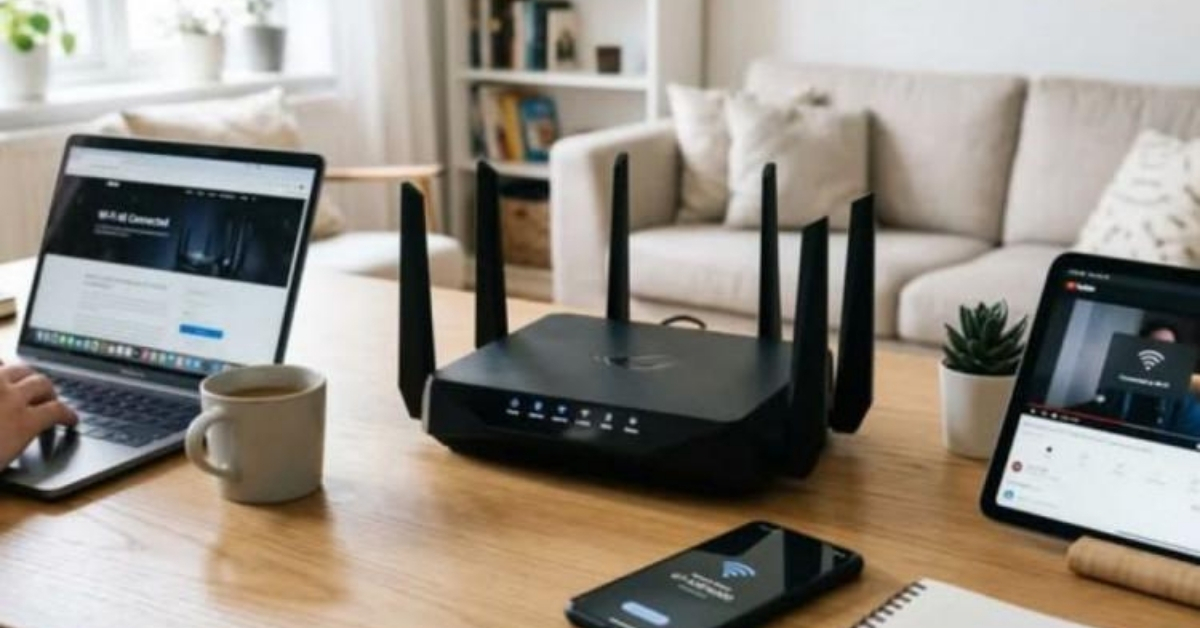
5. Don't Overlook Your Wi-Fi Router
Sometimes slow internet isn’t caused by your broadband plan. Your router could be the problem.
An outdated or poorly positioned router can cause:
- Weak Wi-Fi signals
- Slow speeds
- Dead zones
- Frequent disconnections
- Poor performance in certain rooms
Before upgrading to a faster plan, check whether your router can support the speed you’re purchasing.
For larger homes or multi-floor properties, a mesh Wi-Fi systemmay also help provide better coverage.
6. Reliability Matters as Much as Speed
A high-speed connection isn’t useful if it frequently stops working.
For remote workers, students, gamers, and households that depend heavily on the internet, network reliability is extremely important.
Before choosing a provider, consider:
- Network uptime
- Frequency of outages
- Maintenance practices
- Customer support
- Complaint resolution
- Technical assistance
A stable and reliable connection can often be more valuable than simply having the highest advertised speed.
7. Check Latency
If you play online games or regularly use video conferencing and real-time applications, don’t ignore latency.
Latency is the time taken for data to travel between your device and the destination server. Lower latency generally means a more responsive connection.
Latency is especially important for:
- Online gaming
- Video calls
- Remote desktop applications
- Real-time collaboration
- Live streaming
8. Read the Data and Fair Usage Policy
Before subscribing, check whether the broadband plan includes:
- Data limits
- Fair usage policies
- Speed restrictions
- Additional charges
- Conditions for unlimited usage
This is particularly important for heavy users who regularly stream high-quality content, download large files, or use cloud backup services.
Don’t assume that “unlimited” always means there are no conditions. Read the plan’s terms carefully.
9. Compare the Total Cost
The advertised monthly price isn’t always the complete cost.
Before purchasing, check for:
- Monthly rental
- Installation charges
- Router charges
- Taxes
- Security deposits
- Equipment costs
- Upgrade charges
- Cancellation fees
Comparing the total cost will help you understand which plan actually provides better value.
10. Think About Future Requirements
Your internet usage can increase over time.
You may currently use broadband for browsing and streaming, but later start working from home, gaming, creating content, using cloud storage, or adding smart home devices.
Therefore, consider whether the plan you choose today will remain suitable as your requirements grow.
You don’t necessarily need to buy the most expensive plan. Instead, choose a plan with enough capacity for your current needs and reasonable room for future usage.
11. Check Customer Support
When your broadband connection stops working, customer support becomes extremely important.
Before choosing a provider, check:
- Support availability
- Response time
- Technical assistance
- Installation support
- Complaint resolution
- Available support channels
If you work remotely or rely on the internet for important activities, dependable support can make a significant difference.
12. Consider Fiber Broadband
When selecting broadband in 2027, also consider the technology behind the connection.
Fiber-optic broadband is designed to provide high-speed connectivity and can support demanding activities such as streaming, gaming, video conferencing, cloud applications, and large file transfers.
However, don’t evaluate a provider only by its technology. Network reliability, service quality, equipment, and customer support also matter.
- How many people will use the connection?
- How many devices will be connected?
- How many devices will be active simultaneously?
- Do I need high upload speeds?
- Do I work or study from home?
- Do I stream 4K content or play online games?
- Is the network reliable in my area?
- Does the router support the advertised speed?
- Are there data limits or fair usage policies?
- What is the total cost?
- Is customer support easily available?
- Will the plan meet my future requirements?
Stay Connected with DataExpress
Looking for a fast, reliable, and hassle-free broadband connection? DataExpress provides fiber-based connectivity solutions designed for dependable and seamless internet access.
📞 Call us: 022-6551 0000
📧 Email: contact@dataexpress.co.in
🌐 Website: www.dataexpress.co.in
Get in touch with DataExpress today and find the right connectivity solution for your home or business.